Retinol, Vitamin C, PDRN:
What each one is actually for.
Three anti-aging ingredients. Three completely different mechanisms. One is not better than the others — but understanding the difference changes everything about how you use your skincare.
If you're reading this, you probably already have a routine. Maybe you're still working on it. Maybe you've been using retinol for months and are trying to figure out if you should add something else. Maybe you've heard of PDRN and don't know how it fits into what you already have.
The good news: you don't have to choose. These three ingredients are not mutually exclusive — they work on different biological levels. Understanding what each does helps you use them well together, instead of randomly piling them on and hoping they work.
Retinol — the accelerator
Retinol (vitamin A) is the most studied anti-aging ingredient out there. It works by accelerating cell turnover — skin cells renew faster, the stratum corneum thins, and the skin appears fresher and smoother. It also indirectly stimulates collagen production through retinoid receptors.
The downsides: the first few months of use often lead to irritation, dryness, redness, and peeling — especially for mature skin that has become more sensitive. It requires gradual adaptation. It is not suitable for all skin types, especially those undergoing hormonal transition.
Retinol pushes the skin to work harder. PDRN repairs what the extra work fatigues. They are not competitors — they are complementary.
Vitamin C — the protector and brightener
Vitamin C is an antioxidant that neutralizes free radicals produced by UV exposure and pollution — the main culprits of photoaging. It also inhibits melanogenesis (melanin production), making it effective for spots and hyperpigmentation. And it indirectly stimulates collagen synthesis as a cofactor for the enzymes involved in the process.
It is an excellent morning ingredient — antioxidant protection makes sense when you go out into the world. It is unstable, requiring careful formulation and packaging to preserve it from oxidation.
PDRN — the regenerator
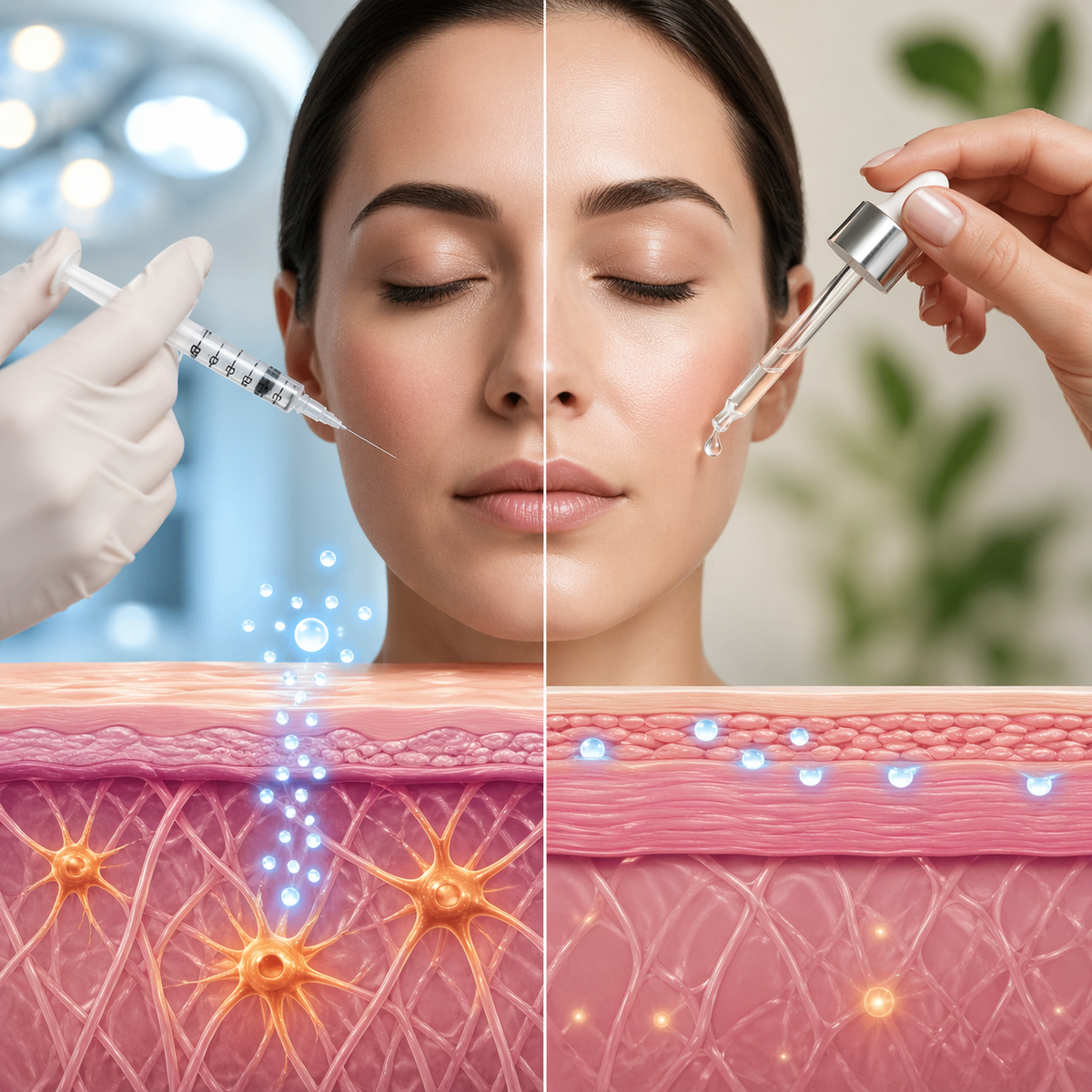
PDRN operates on a different level from both. Not an exfoliant, not an antioxidant — it's a regenerator. It activates adenosine A2A receptors on fibroblasts, stimulating endogenous production of collagen, elastin, and hyaluronic acid. It improves microcirculation. It reduces inflammation. It doesn't add anything to the skin's surface — it reactivates the internal production system.
How to use them together — the Aurea protocol
Morning: vitamin C (antioxidant protection) → moisturizer → SPF. Evening: retinol (if you use it) → wait 15 minutes → PDRN (reduces retinol irritation and supports the barrier) → moisturizer. PDRN also works alone, as the sole evening active, for those who don't use retinol or have skin too sensitive to start.
Which to choose if you can only pick one
If your priority is active prevention and you are willing to go through the adaptation period: retinol. If your skin is sensitive, undergoing hormonal changes, or you are looking for something that supports regeneration without irritation: PDRN. If you have hyperpigmentation, spots, or want daily protection from UV aging: vitamin C.
If you can use more than one — and your skin tolerates it — the combination of vitamin C in the morning + PDRN in the evening is one of the most balanced and effective protocols for skin after 35. Retinol can be added gradually, with PDRN as an anti-irritation buffer.
References: Healthline (2025) — "How to Have Your Best Skin in Your 40s" · The Nod Mag (2025) — "Can PDRN Serums Replace Salmon Sperm Facials?" · EmpowerHerFame (2026) — "PDRN Skincare Guide"