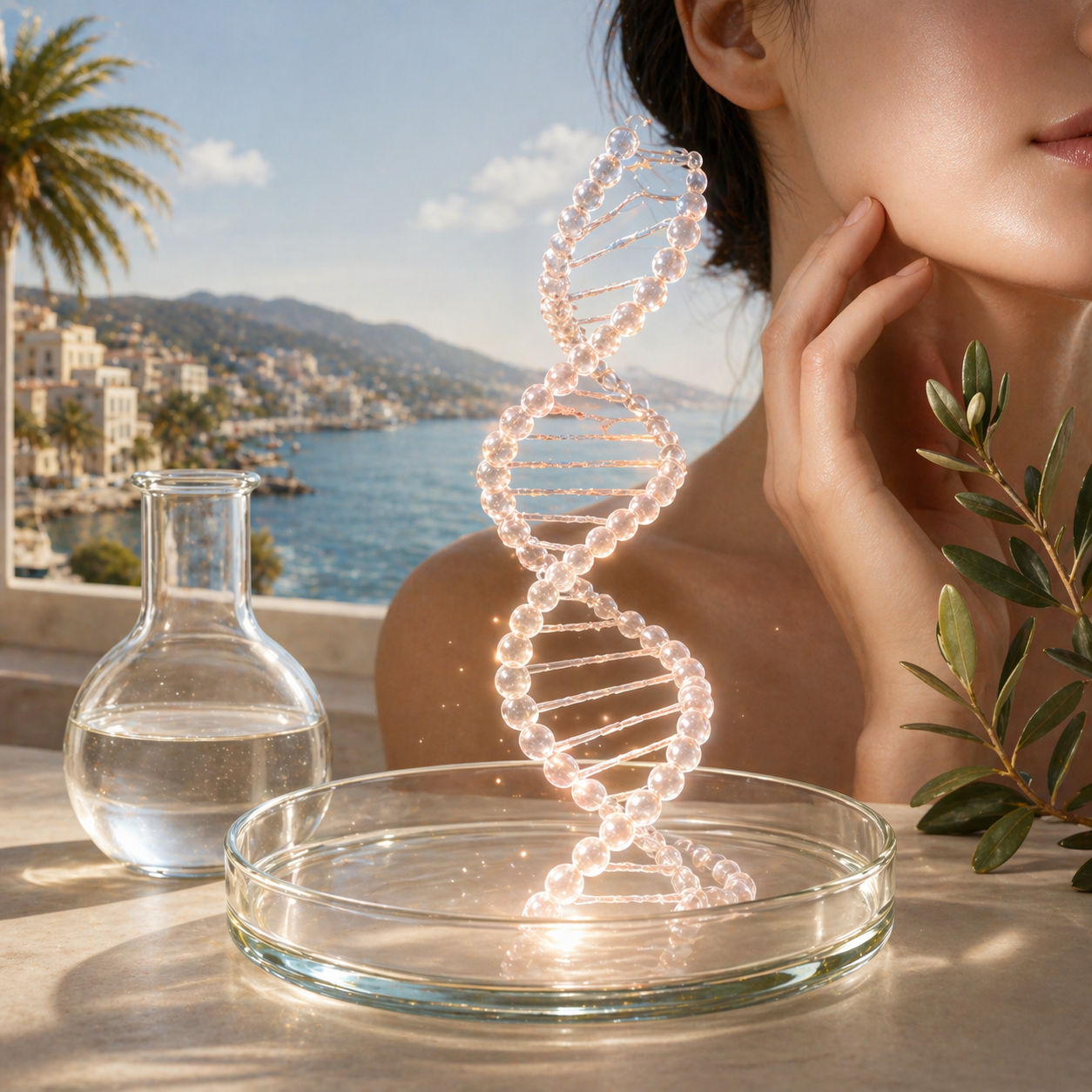
It's not a moisturizer. It doesn't stimulate from the outside. PDRN activates the repair system your skin already has. Here's how it really works — no jargon.
Think about the last time you cut your finger. Maybe you put a band-aid on it. Maybe not even that. And after a few days, your skin was back to normal — maybe even better. You didn't do anything special. Your body already knew what to do.
That process isn't magic. It's the result of a precise biological system: your skin's repair cells — fibroblasts — receive a signal, activate, and begin to rebuild. They produce collagen. Elastin. Hyaluronic acid. They repair the barrier. They regenerate tissue.
PDRN is the molecule that delivers that signal.
PDRN doesn't add anything to your skin from the outside. It tells your cells to do what they've always done — just better, and more often.
How it works in detail
PDRN stands for polydeoxyribonucleotide — a DNA fragment extracted from salmon through a purification process that removes all protein and biological material. What remains is a pure nucleotide chain that the skin recognizes as its own.
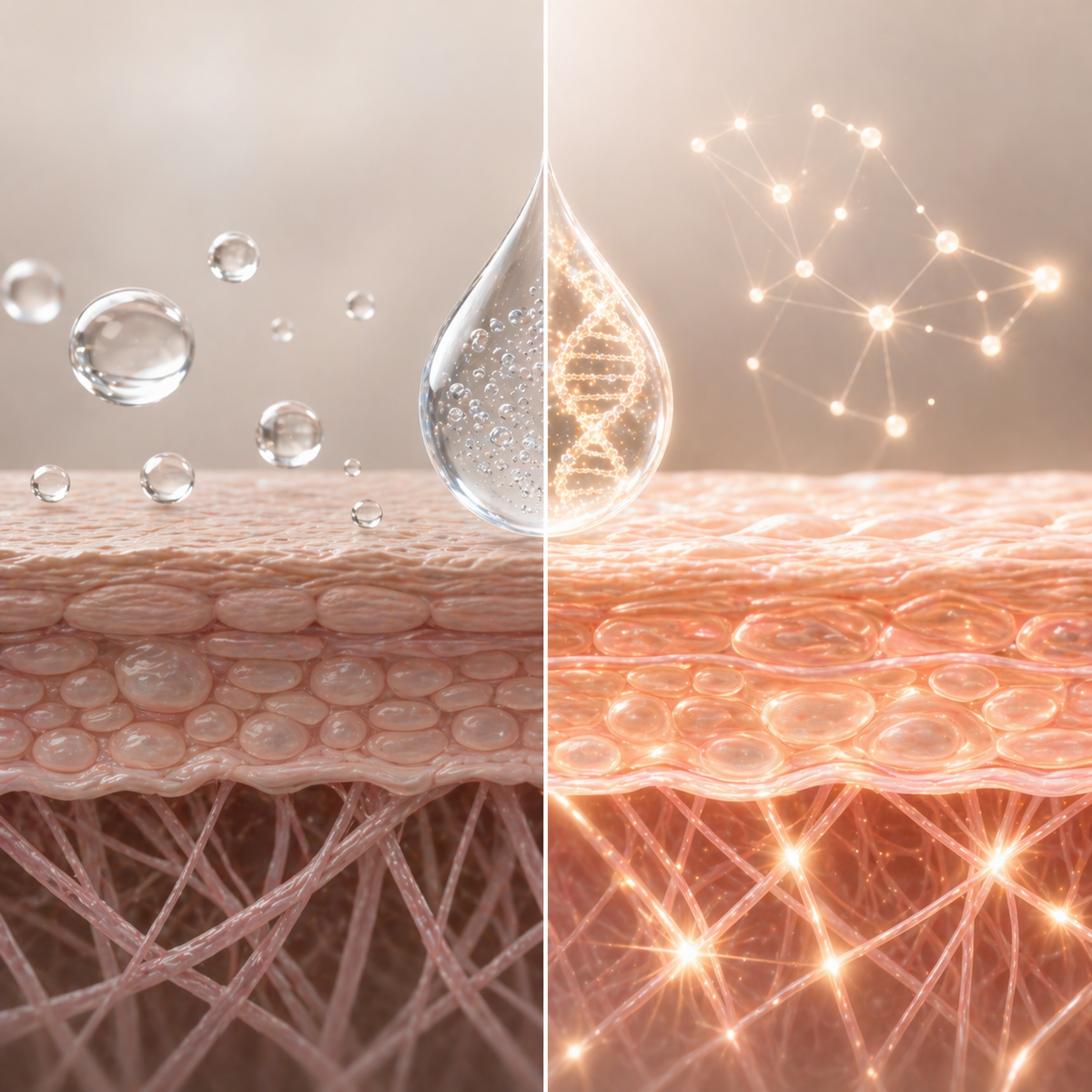
When applied, PDRN binds to adenosine A2A receptors on the surface of fibroblasts. These receptors are essentially the "on switch" for cell regeneration. When activated, they trigger a biological cascade:
-
Fibroblasts begin to produce more type I collagen — the supporting structure of firm skin
-
Endogenous elastin and hyaluronic acid production increases
-
VEGF (vascular endothelial growth factor) is upregulated — microcirculation improves, skin receives more oxygen
-
Pro-inflammatory cytokines are suppressed — skin calms down, even skin that reacts to aggressive actives
Why it works particularly well after 35
When you're young, your fibroblasts are naturally active. They constantly produce collagen, respond quickly to repair signals, and skin regenerates almost automatically. After 35 — accelerated by hormonal changes, chronic stress, and accumulated UV damage — this activity slows down.
Fibroblasts don't die. They don't stop working. They simply stop receiving the signal with the same intensity. And that's exactly where PDRN comes in — not by adding something that's missing, but by reigniting something that has faded.
The reason your skincare stops being "enough" after 35 isn't that you need stronger products. It's that none of those products address the right mechanism.
It's not K-beauty. It's Italian science.
PDRN was developed in Italy in 1984 — in a biopharmaceutical laboratory in Sanremo. It was approved by AIFA as a drug in 1994. For twenty years, it was used in Italian clinics to heal wounds, ulcers, and radiation damage. Only later did Korean aesthetic clinics adopt it as an injectable skin booster — and from there it became the global phenomenon you know.
At Aurea, we formulate with pharmaceutical-grade PDRN — the same quality used in clinical settings, in products designed for daily routines. Not to chase a trend. But to bring Italian science back to where it originated, and where it belongs.
References: Tonello et al. (1996), Mastelli Srl Sanremo · Squadrito, Bitto et al. (2017), University of Messina — Frontiers in Pharmacology · MDPI Applied Sciences (2025) — full text available at aurea.it/il-pdrn