Before viral serums. Before Seoul. An Italian lab and a discovery the world took forty years to recognize as its own.
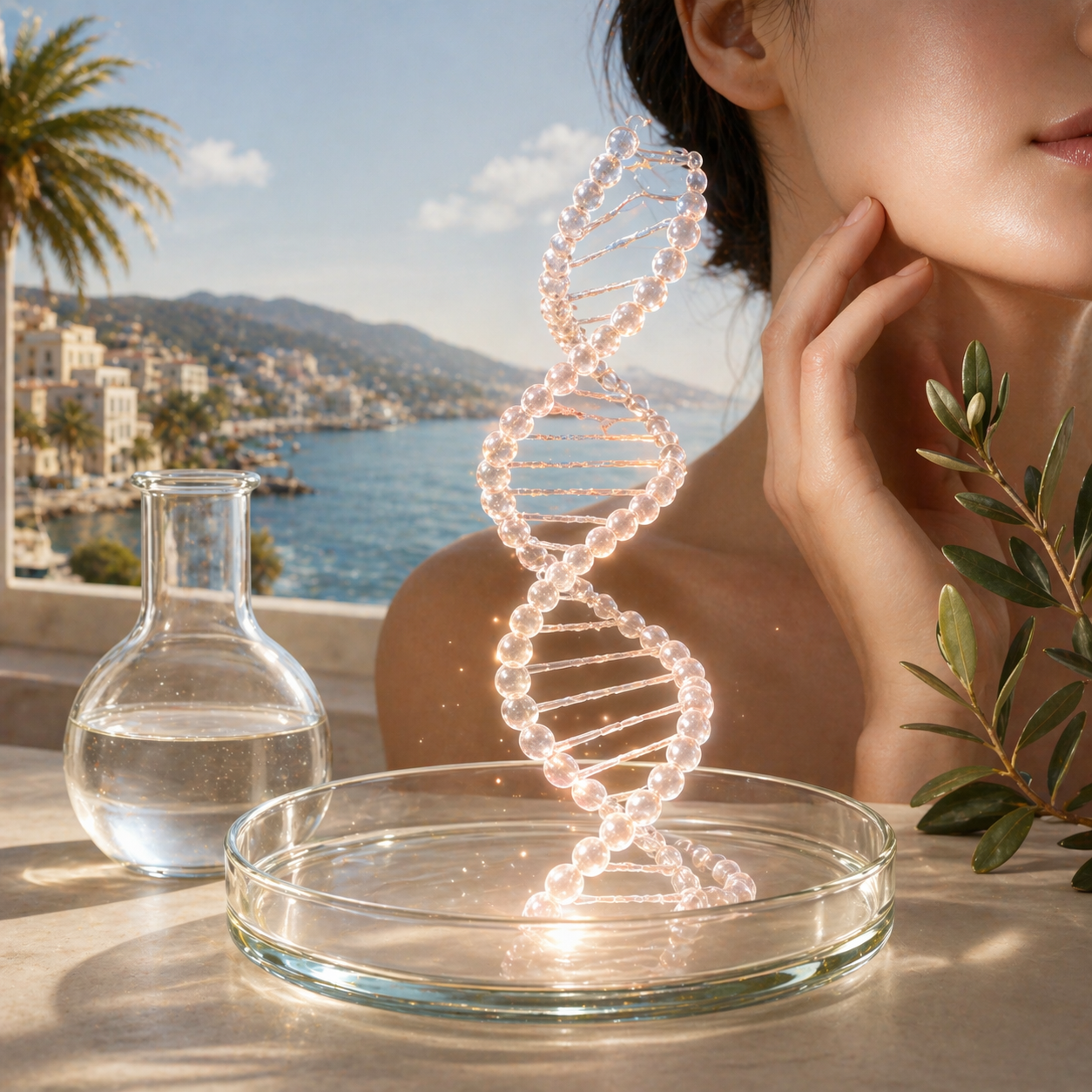
Sanremo, 1984. A Ligurian city overlooking the Mediterranean — more famous for the Italian Song Festival than for scientific research. Yet it was here, in a biopharmaceutical laboratory at Mastelli Srl, that a group of Italian researchers was working on something that would change global dermatology — without knowing it yet.
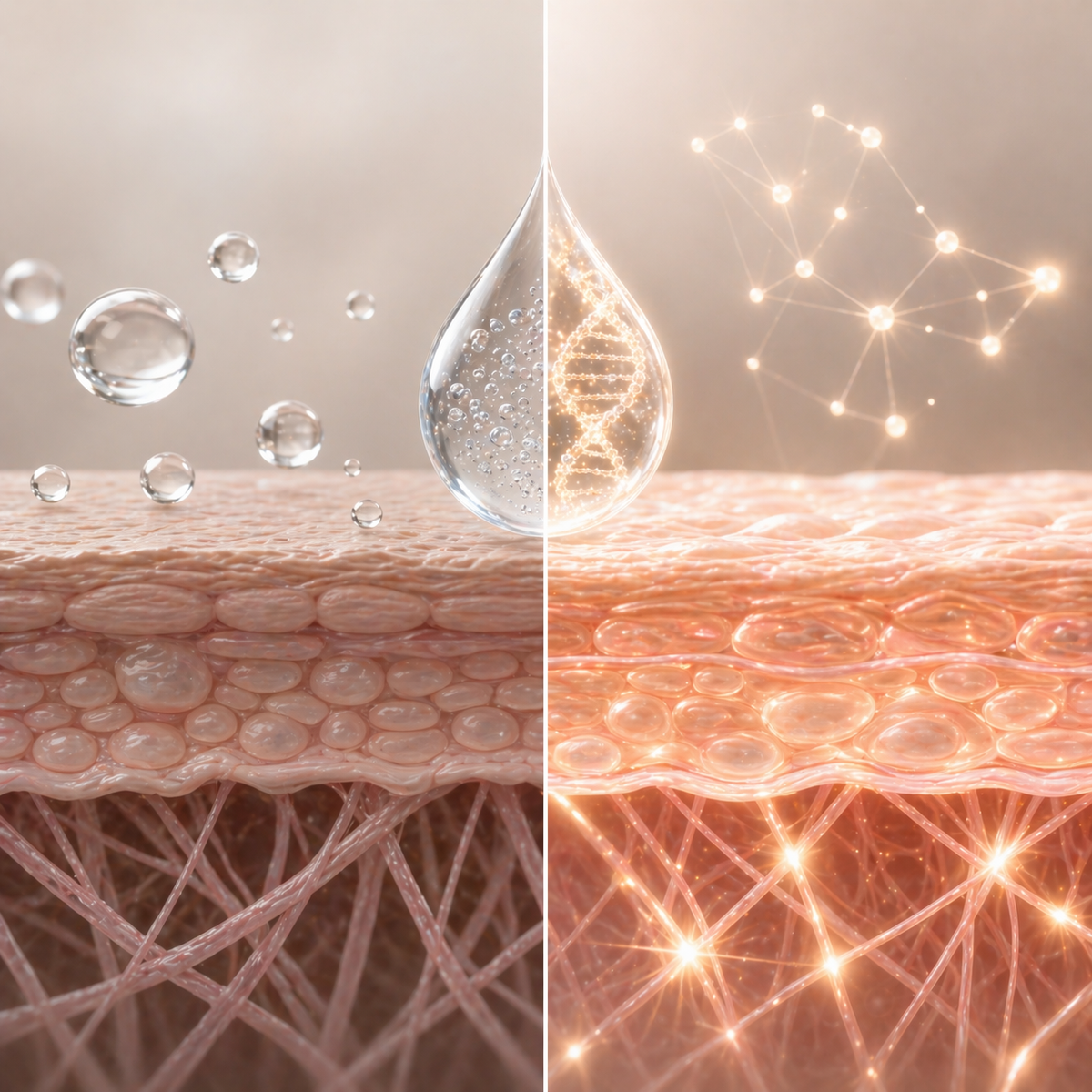
They were studying tissue healing. Specifically, they were trying to understand why some skin damage healed slowly and poorly — leaving scars, infections, fragile tissue — while others closed cleanly and quickly. The answer, they discovered, was in a molecule already present in human tissues: a DNA fragment capable of activating repair cells as if simply telling them to do their job.
They called it polydeoxyribonucleotide. We call it PDRN.
It was not a discovery sought for beauty. It was a discovery sought to heal people. That difference is still felt today — in the clinical weight that no cosmetic ingredient born in marketing has ever had.
The drug nobody knew
In 1994, the Italian Medicines Agency approved PDRN — marketed as Placentex — for the treatment of skin ulcers, difficult scarring, and connective tissue diseases. It was the first registered PDRN drug in the world.
For the next fifteen years, PDRN was quietly used in Italian and European clinics. Surgeons used it to accelerate post-operative healing. Dermatologists used it to treat chronic ulcers that did not respond to other treatments. The results were documented, published, replicated — but remained within the perimeter of medicine, far from the beauty world.
The data
In the most cited clinical study — Squadrito et al. (2014), 216 patients, University of Messina — PDRN nearly doubled the complete healing rate of diabetic ulcers compared to placebo (37.3% vs 18.9% in 8 weeks). This was 2014. The TikTok trend would arrive ten years later.
The moment Korea discovers it
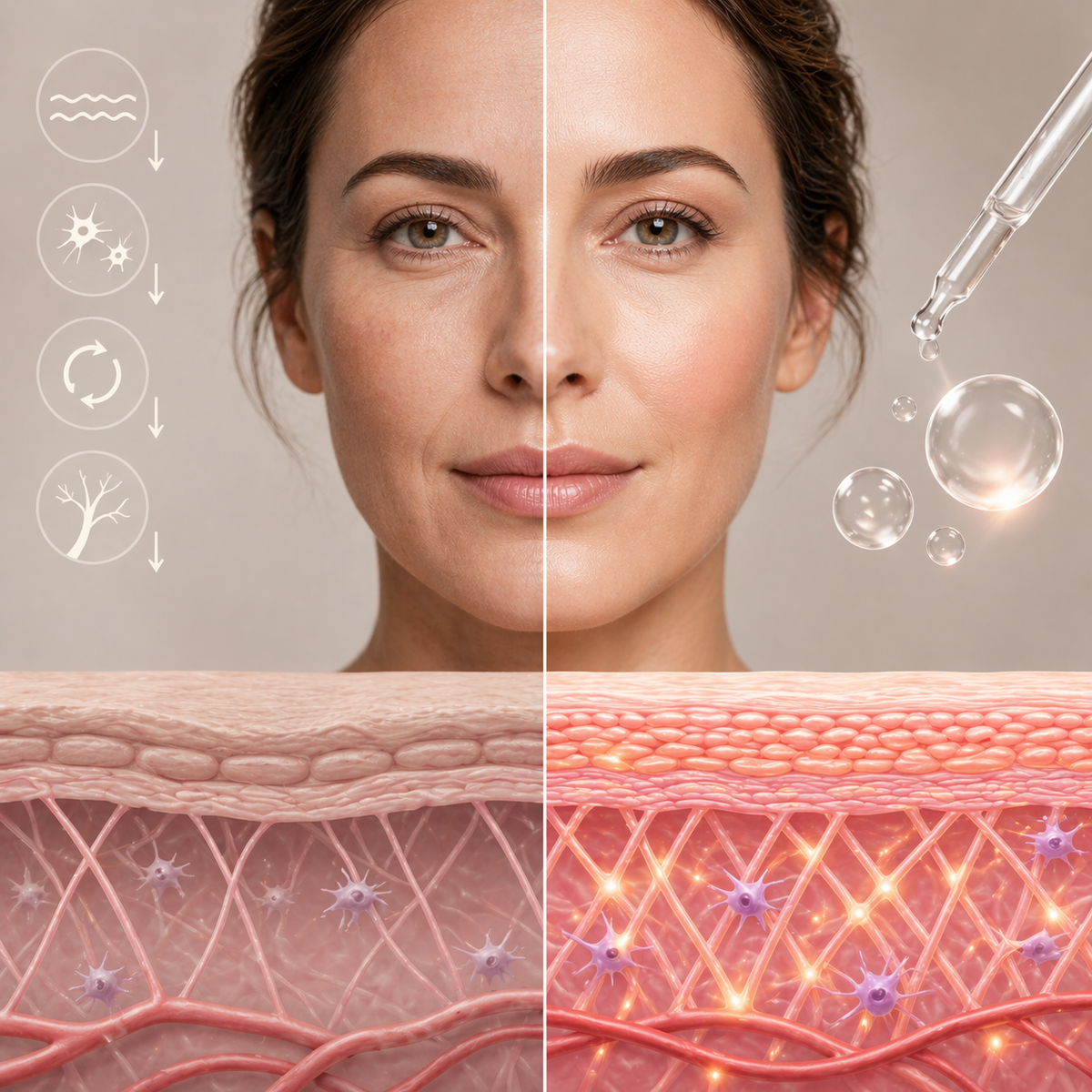
Around 2009, Korean aesthetic dermatologists began experimenting with PDRN as an injectable skin booster — not to heal wounds, but to improve skin elasticity, reduce fine wrinkles, and give the skin that quality known in Korean as "chok-chok": bouncy, luminous, alive. The results were visible. Waiting lists grew. Rejuran Healer was born — and with it, the entire PDRN phenomenon in aesthetics.
Over the next ten years, PDRN went from a niche drug to an ingredient of the moment. TikTok renamed it "salmon sperm facial." Celebrities flew to Seoul. The global market exploded. And almost no one, in all that noise, remembered that the science originated in Italy — in a laboratory overlooking the Mediterranean, forty years earlier.
The world discovered PDRN through Korea. Aurea brings it back to its origin — with the same pharmaceutical seriousness with which it was built.
Why this changes everything
We don't say this out of national pride. We say it because it matters — scientifically and practically. The Italian pharmaceutical tradition has produced PDRN research that is still the bibliographic basis for every subsequent study. The universities of Messina, Genoa, and Milan have contributed decades of clinical evidence that Korean clinics then applied in aesthetics. That science is not just Italian in name — it is Italian in substance.
At Aurea, we formulate with pharmaceutical-grade PDRN, with formulas designed for European women, and with the transparency of someone who knows the sources because they have read them — not because they cited them for marketing.
References: Tonello et al. (1996), J. Pharm. Biomed. Anal. · Squadrito et al. (2014), J. Clin. Endocrinol. Metab. · AIFA — Placentex approval 1994 · in-cosmetics Connect (2025) — "The rise of PDRN skincare"