It's not tiredness. It's not the seasons. It's not that "you're getting old." It's precise biology – and knowing what's happening helps you choose how to respond.
There's a moment – often around 37, 38, 40 years old – when you notice something. Your skin isn't what it used to be. Not in the dramatic way you expected, not with deep wrinkles or obvious changes. It's more subtle than that. Your skin is less bouncy in the morning. Fine lines seem to linger longer. Your tone isn't what it was three years ago. And the cream you used, the one that "worked," no longer seems enough.
It's not your imagination. It's not tiredness. It's biology – and understanding exactly what's happening is the first step to choosing how to respond.
What Really Happens After 35
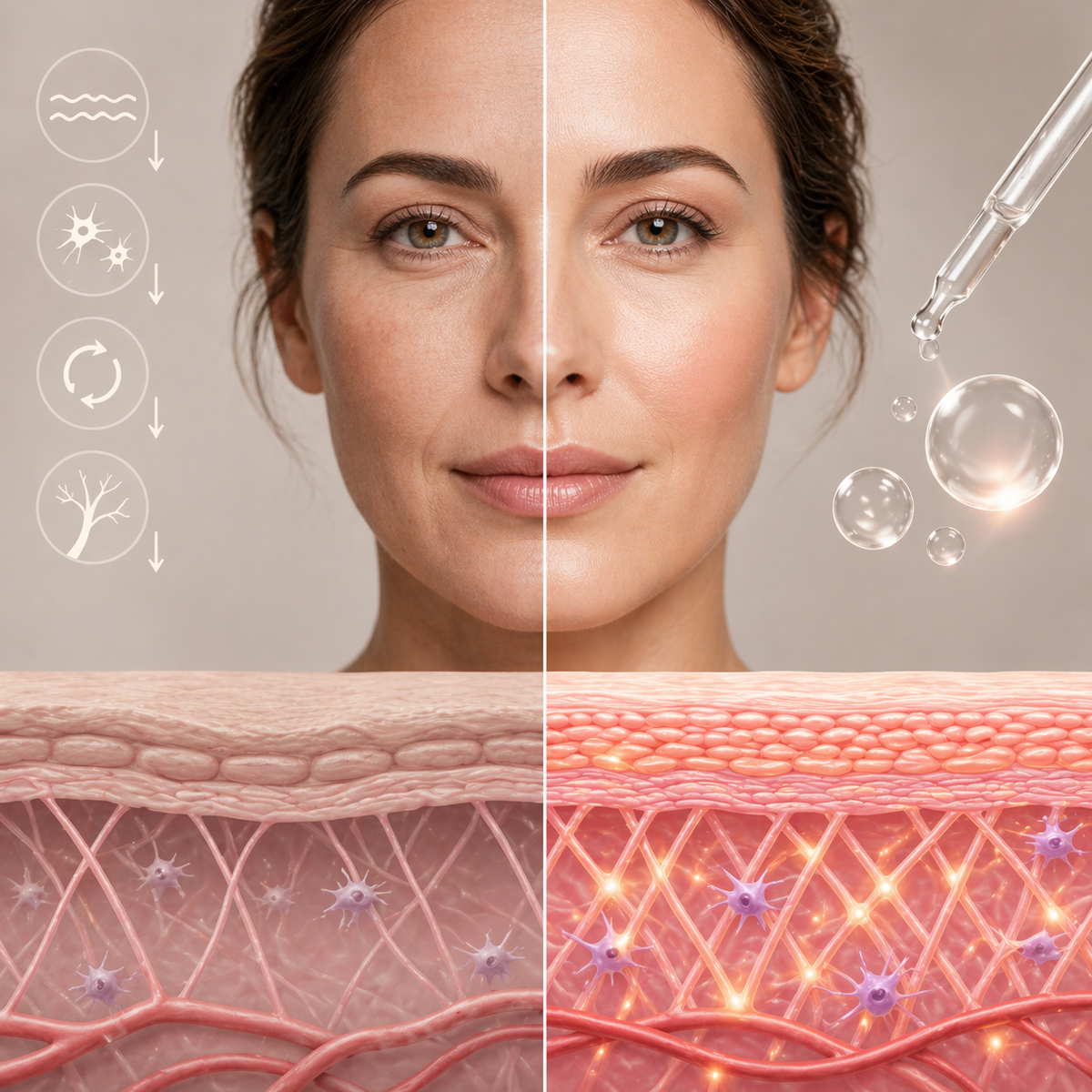
From your mid-twenties onwards, collagen production decreases by about 1% each year. It's a gradual slowdown, almost imperceptible at first – then, around 35, enough accumulates to become visible. But it's not just collagen.
-
Fibroblasts – the cells that produce collagen, elastin, and hyaluronic acid – become less responsive to repair signals
-
Cell turnover slows down: skin cells renew less often, making skin appear less radiant
-
Microcirculation decreases: less oxygen and nutrients reach deep cells
-
Hormonal changes – especially during perimenopause, which can start as early as 38 – accelerate all this: skin becomes thinner, drier, less resistant to external stressors
You don't need a richer cream. You need a cream that speaks to the right cells – those that, if properly stimulated, produce from within what creams try to add from the outside.
Why the Skincare That Worked at 28 Stops Being Enough
The moisturizing creams you used worked – and partly still do. But hydrating the surface of skin with less collagen and less cellular activity produces an increasingly temporary effect. It's like trying to fill a bucket with a hole: water goes in, but it doesn't stay.
Retinol helps – it speeds up cell turnover, indirectly stimulates collagen production, and works. But for many skin types after 35, which progressively become more sensitive, retinol irritates more than it nourishes. Something is needed that can work with active ingredients without adding stress.
The Hormonal Moment Nobody Mentions
Perimenopause – the transition leading up to menopause, often between 38 and 45 – is the period when skin changes accelerate the most. The drop in estrogen reduces the skin's ability to retain collagen and water. Many women notice significant changes during this phase without having a name for them. If your skin "changed" after 38, it's very likely that's when it began.
How to Respond – With Biology, Not Against Time
The answer isn't to fight aging. It's to support the biological mechanisms that slow down – not to return your skin to how it was at 28, but to help it function at its best for what it is now.
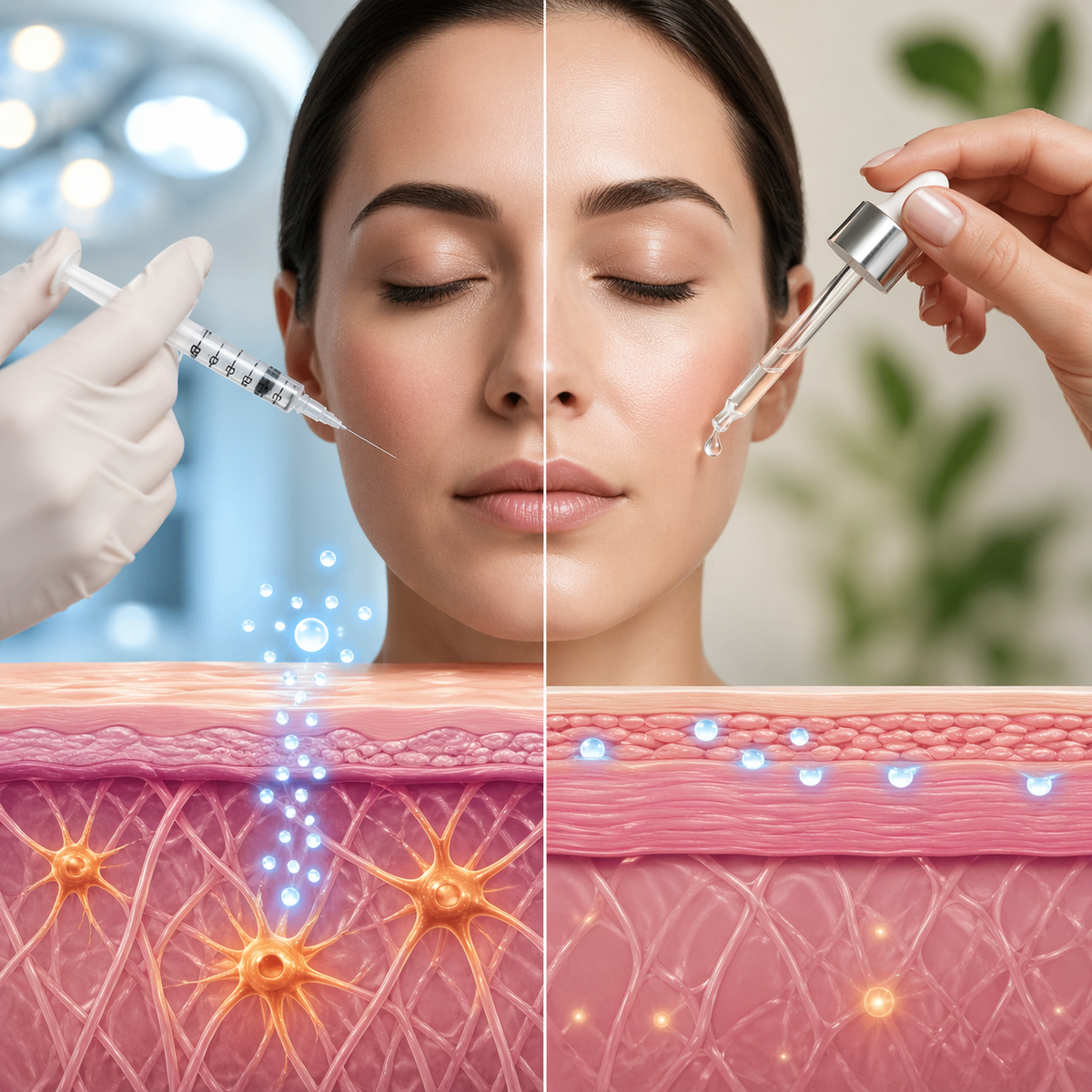
This is where PDRN stands out from other anti-aging ingredients. It doesn't act on the surface – it acts on fibroblasts, activating the cellular repair mechanism that receives progressively weaker signals after 35. It doesn't add collagen: it tells your skin to produce more, from within. It's the difference between hydrating and regenerating.
It's not an immediate solution. It's a biologically coherent approach to what's happening in your skin – and that's why it works where much else stops being enough.
References: Menstreaze (2025) — "PDRN for Skin: An Age-by-Age Guide" · One Eye Beauty (2025) — "What is PDRN in Skincare" · CeraVe Skin Science — "Anti-Aging Skincare Routine"